
Building a professional community: what I’ve learned along the way

Updated: Aug 3
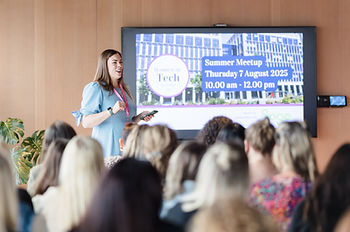
Professional communities don’t just happen. The best ones are built deliberately, with care and a lot more work behind the scenes than most people ever see.
I was invited to speak at DisruptHR about building professional communities, sharing what I’ve learned from co-founding and growing Women in Tech North East (WiTNE). Whether you’re thinking about setting something up inside your organisation, across a region, or as an independent initiative, these are the principles that have made the biggest difference for us.
This isn’t a step-by-step formula. It’s a set of grounded, real-world lessons from trying things, getting things wrong, and listening carefully to the people the community is actually for.
Start by finding the gap
Before you book a venue, design a logo or set up a LinkedIn group, take a step back and ask one simple question:
What problem is this community solving?
When I pivoted into tech from the cultural sector, I went looking for a community that reflected my experience and couldn’t find one. After about 18 months of moaning about it (a very important research phase), I realised the gap wasn’t going to fill itself.
That became the starting point for WiTNE.
Be honest here. Does something like this already exist? If it does, is the real gap about who it’s for, how it works, or how it feels? Clear objectives, ideally realistic and measurable ones, will save you a lot of pain later.
We’ve always been clear that we can’t “fix” the tech sector on our own. Our focus is on upskilling people, building confidence, and making enough noise that change becomes harder to ignore.
Be specific about who it’s for (and who it’s not)
One of the biggest mistakes I see, and this comes from my day job as a marketing consultant, is trying to be everything to everyone. It doesn’t work for brands, and it definitely doesn’t work for communities.
Ask yourself:
Who is this community really for?
Who will feel immediately comfortable walking into the room?
Who might feel excluded if you get this wrong?
For WiTNE, gender is nuanced and evolving, so we’re explicit about who the space is designed to support, while recognising that allies matter too. Some of our events are open to everyone, because you don’t build a more equitable sector by talking only to the people already affected.
Practical details matter more than you think. Time of day. Frequency. Location. Accessibility. We avoid early mornings and late nights, keep events alcohol-free, and think carefully about venues and food so that as many people as possible can attend without having to explain themselves.
Inclusion is designed, not assumed.
Governance isn’t boring, it’s essential
Brilliant ideas are easy. Running something well, sustainably and professionally is the hard bit.
Communities take real time and energy. They’re rarely a true “side-of-desk” project, even though they often start that way. You need clarity on ownership, decision-making, and how success is measured.
WiTNE is volunteer-led, but we formalised as a CIC so we could access funding, build credibility, and put proper structures in place. That work happens quietly in the background, but it’s what allows the community to keep showing up consistently.
Create a feedback loop and use it
Once you know who your community is for and what you’re trying to achieve, make it easy for people to talk back to you.
That might be:
Ideas for future events
Offers to speak or run workshops
Feedback on what’s working (and what isn’t)
One important caveat: you will never please everyone. Don’t let one negative comment outweigh the voices of people who are getting real value.
At WiTNE, the directors are very clear that it’s not about us. The community helps shape the programme, and because they feel listened to, they’re generous with their time, ideas and connections.
Value has to be obvious
Coffee, cake and conversation are lovely, and they are part of every WiTNE event but they’re not enough on their own.
If I were a people manager signing off time away from work, or someone juggling caring responsibilities, I’d want to know there was a clear benefit. That’s why we always include a learning element: practical workshops, panels, career skills, or technical insight.
It means our events can count towards CPD, and they don’t feel like “just networking” which, let’s be honest, can feel awkward or indulgent for some people.
Yes, refreshments really matter
I have strong feelings about this one.
We’re an alcohol-free community, partly for inclusion and partly because we didn’t want to create another tech event centred around drinking. It also keeps costs down and removes barriers for a lot of people.
But please, don’t scrimp on refreshments.
Cake doesn’t offend anyone. Good food keeps people energised and signals that you’ve thought about their experience. Catering is one of the simplest ways to show care and people remember it. We still talk about the spread at one of our early events (Aspire, if you’re reading this… outstanding work).
Invest in photography and video (if you can)
A picture really does tell a thousand words. Every image in my DisruptHR talk came from past WiTNE events, and they do a huge amount of heavy lifting.
They help:
New people imagine themselves there
Partners and sponsors see the impact
Managers understand the value
PR and award entries tell a clearer story
If budget is tight, get creative. Call in favours, work with students, or find someone internally who loves photography. Having something is always better than having nothing.
Don’t build alone. Partnerships matter
Communities are hard work, especially when they sit alongside a day job. Finding like-minded partners helps share both the workload and the financial risk.
For us, partnerships are what will allow WiTNE to move from running event-to-event to building something more sustainable. In 2026, we are outsourcing our admin so we can focus on strategy, governance and adding even more value. If your community is growing, that shift becomes essential.
Final thoughts
If you take nothing else away from this, let it be this: good communities are designed with intention, empathy and realism.
They don’t need to be perfect. They do need to be thoughtful.
If you’d like to hear the full talk, delivered in true DisruptHR style with fast-moving slides and plenty more context, you can watch the recording here.
And if you’re thinking about building a community of your own, I hope this gives you a few practical starting points and the confidence to begin. And if you want external support to help set up a community, our Strategy Sprint can be tailored to this objective.


